
Arc flash hazards remain one of the most dangerous risks in industrial electrical environments. Even well-maintained systems can become unsafe over time, especially as equipment ages, loads increase, and processes evolve.
For many organizations, the real question is not whether arc flash risks exist, but whether current safety practices, training, and system evaluations are enough to prevent serious injuries or operational disruptions.
NFPA 70E provides a framework for electrical safety, but compliance alone does not guarantee protection. Without ongoing training, infrared (IR) inspections, and consistent safety procedures, gaps can develop that increase risk across facilities.
At Universal Electrical, we work with industrial organizations to identify those gaps through hands-on arc flash training and proactive system inspections designed to improve safety, compliance, and long-term reliability.
Why Arc Flash Safety Requires More Than Awareness
Understanding arc flash hazards is only the first step. Many facilities recognize the risks, but awareness alone does not prevent incidents.
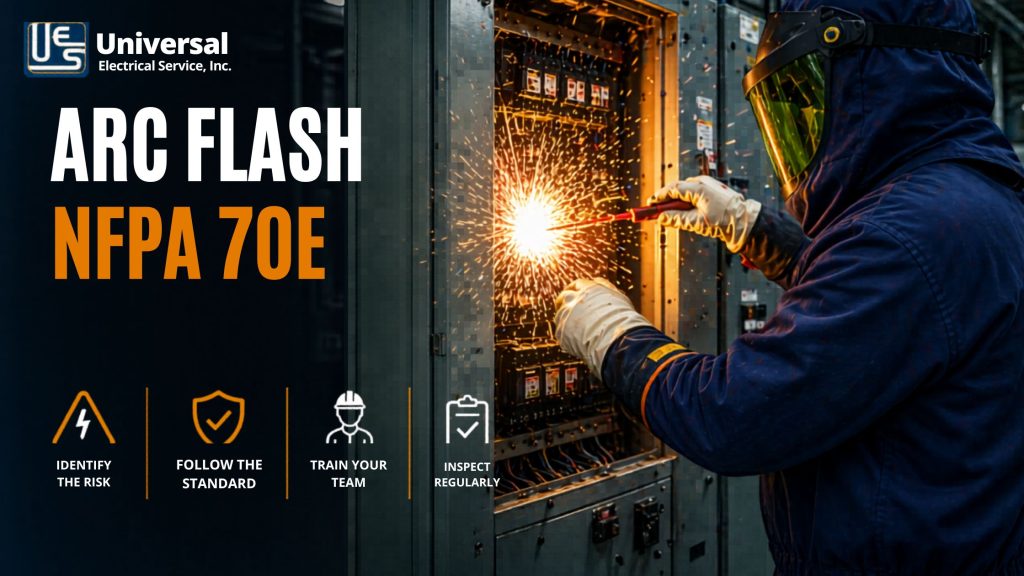
An arc flash occurs when electrical current leaves its intended path and travels through the air between conductors or to ground. This releases an intense burst of energy that can generate extreme heat, pressure, and light in a fraction of a second.
In industrial environments, arc flash incidents often result in:
- Serious injury or burns to personnel
- Damage to electrical and power distribution systems
- Unplanned downtime and production loss
- Increased liability and compliance risk
These outcomes are rarely caused by a single failure. More often, they result from gaps in training, outdated system data, or inconsistent safety practices across teams.
Preventing arc flash incidents requires a structured approach that combines training, system evaluation, and ongoing compliance management.
The Role of NFPA 70E in Electrical Safety
NFPA 70E serves as the primary standard for electrical safety in the workplace, providing clear guidance on how to identify, assess, and control electrical hazards.
However, compliance is not a one-time task. It requires continuous effort to ensure that procedures, equipment, and employee knowledge remain aligned with current safety standards.
Key NFPA 70E requirements include:
- Conducting arc flash risk assessments
- Proper labeling of electrical equipment
- Defining safe working distances and boundaries
- Using appropriate personal protective equipment (PPE)
- Providing ongoing employee training
Facilities that treat NFPA 70E as a checklist often miss critical gaps. True compliance comes from integrating these practices into daily operations and ensuring that teams are properly trained to apply them in real-world conditions.
How to Prevent Arc Flash Incidents (Training + Inspections)
Preventing arc flash incidents requires more than policies. It depends on how safety is applied in real working conditions.
In many facilities, common risk factors include:
- Outdated or incomplete arc flash studies
- Inconsistent employee training
- Lack of routine system inspections
- Missing or incorrect equipment labeling
- Variations in safety practices across locations
Addressing these issues requires a combination of training and system evaluation.
At Universal Electrical, this approach includes:
Arc Flash Training (Universal Academy)
Hands-on training programs designed to help teams:
- Identify hazards before work begins
- Understand safe working distances and boundaries
- Properly use PPE based on risk levels
- Respond effectively in high-risk situations
Training is delivered through Universal Academy, providing real-world instruction that goes beyond basic compliance.
Infrared (IR) Inspections
IR inspections allow technicians to detect hidden issues within active electrical systems, including:
- Loose or failing connections
- Overloaded circuits
- Abnormal heat patterns
By identifying these issues early, facilities can prevent equipment failure, reduce downtime, and minimize the likelihood of arc flash incidents.
Together, training and inspections create a proactive safety strategy that reduces risk and improves long-term system performance.
Supporting Safety Across Multiple Locations
For organizations operating across multiple facilities, maintaining consistent safety standards can be challenging.
Each location may have different equipment or operating conditions, but safety expectations must remain aligned.
Universal Electrical supports industrial facilities across multiple states, with operations based in Pennsylvania and Florida, helping standardize safety practices, improve compliance, and reduce variability across locations.
Conclusion
Arc flash hazards cannot be eliminated entirely, but they can be managed through consistent training, system evaluation, and adherence to established safety standards.
At Universal Electrical, the focus is on helping organizations improve safety through education and proactive system analysis.
If you are evaluating your current safety practices, consider whether your team has the training and system insights needed to operate safely.
Contact Us to schedule arc flash training, IR inspections, or a safety evaluation for your facility.
NFPA 70E is a standard that outlines electrical safety requirements to protect workers from hazards such as arc flash.
OSHA requires employers to identify electrical hazards, provide appropriate training, and ensure safe work practices are followed when working with energized systems.
PPE may include arc-rated clothing, insulated gloves, face shields, and other protective equipment based on the level of risk identified during an assessment.
Electrical systems should be evaluated regularly, especially after system changes, equipment upgrades, or increased load demands. Infrared inspections help identify issues before they become failures.