
Industrial power distribution systems can often be upgraded without shutting down an entire facility, but that does not mean every part of the project can remain energized. The practical approach is to divide the work into controlled phases, keep unaffected loads operating, use temporary or redundant power where feasible, and schedule brief cutover windows for final connections.
Planning should begin with an accurate view of the existing system, the loads that must remain available, and the facility’s production schedule. The objective is to preserve critical operations while qualified electrical teams safely isolate the equipment or sections being modified.
Define Which Operations Must Remain Available
“Without shutting down operations” usually means avoiding a full-facility outage, not guaranteeing that every circuit and machine will remain available. The project team must separate critical loads from equipment that can be paused, transferred, or scheduled around.
Critical loads may include process controls, refrigeration, data systems, safety equipment, ventilation, medical equipment, or production lines with difficult restart procedures. Operations, maintenance, engineering, safety, and production personnel should agree on the priority list.
Universal Electrical’s power distribution services include primary and secondary distribution, switchgear, motor control centers, disconnects, lighting panels, and panelboards. Understanding how these components support each operating area helps define the upgrade sequence.
Assess the Existing Industrial Power Distribution System
A phased project depends on accurate system information. Before construction, the team should verify the one-line diagram, equipment ratings, available capacity, protective devices, feeder routes, grounding, and the loads served by each distribution section.
The assessment should identify:
- Single points of failure
- Circuits that cannot be interrupted together
- Available spare capacity and physical space
- Aging or obsolete equipment
- Loads with high starting current
- Existing generators, UPS systems, tie breakers, or redundant feeds
- Future expansion requirements
Site walkthroughs, equipment inspections, load measurements, and coordination with facility personnel help expose unknown conditions before a critical transition. This preparation is especially valuable for industrial electrical projects across multiple locations, where infrastructure and operating constraints may differ.
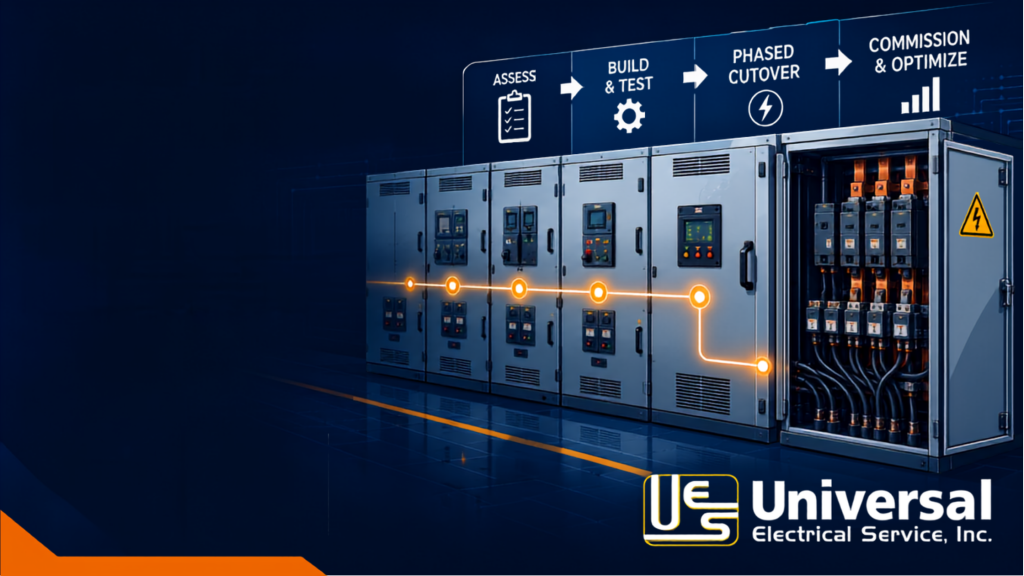
Build and Test Before the Cutover
Disruption can be reduced by completing new work while the existing system remains in service. Depending on the design, crews may install new switchgear, panels, feeders, conduit, controls, or equipment connections before transferring loads.
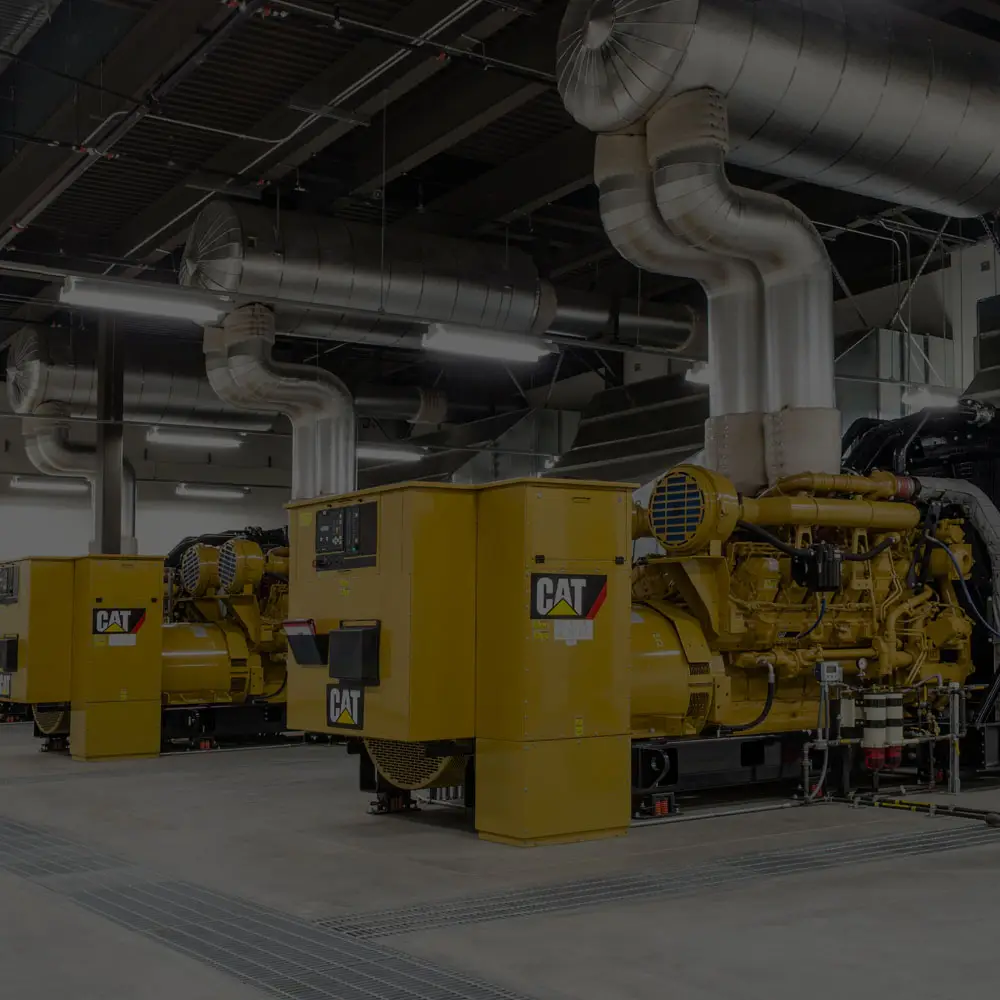
Temporary power may support selected operations during part of the upgrade. Possible sources include an appropriately sized generator, available UPS capacity, a redundant feed, or a temporary distribution arrangement. The method must account for connected load, motor starting current, grounding, overcurrent protection, power quality, and expected duration.
Pre-staging also applies to labor and materials. Equipment should be inspected, conductors prepared, labels created, tools positioned, and responsibilities assigned before the outage window opens. Universal Electrical’s article on meeting industrial electrical project deadlines explains why sequencing and readiness affect execution.
Use Phased Cutovers Instead of One Facility-Wide Transfer
A phased cutover divides the upgrade by feeder, production area, switchgear section, building zone, or equipment group. Each phase follows a defined switching and work sequence, allowing unaffected portions of the facility to continue operating.
The plan should identify the shutdown boundary, responsible personnel, lockout and tagout steps, verification points, communication procedures, restart sequence, and contingency plan. Final tie-ins can then be scheduled during the lowest-impact operating window.
Avoiding a full shutdown must never be treated as permission to perform unnecessary energized work. OSHA’s electrical work-practice standard generally requires exposed live parts to be deenergized before employees work on or near them, except under limited conditions involving increased hazards or infeasibility. A site-specific safety plan must determine how each section will be isolated, verified, and controlled.
Commission Each Phase Before Moving Forward
A transfer is not complete when the conductors are connected. Each phase should be checked before the next group of loads is moved.
Commissioning may include verifying voltage, phase rotation, protective-device operation, control functions, equipment startup, alarms, labeling, and communication with connected systems. Normal and emergency operating procedures should also reflect the new configuration.
Changes to feeders, protective devices, available fault current, or equipment configuration may affect an arc flash hazard analysis and equipment labels. Universal Electrical’s resource on arc flash and NFPA 70E safety provides additional context for evaluating hazards after system changes.
Plan the Transition Before Construction Begins
The most reliable way to reduce disruption is to develop the cutover strategy alongside the electrical design. Critical-load priorities, temporary power, equipment lead times, safety procedures, testing, and restart responsibilities should be resolved before work reaches the existing system.
Universal Electrical supports commercial and industrial electrical services for power distribution, equipment upgrades, and facility expansions. Facilities planning an upgrade can discuss their power requirements and operating constraints with the Universal Electrical team.
FAQs
Sometimes critical operations can remain available throughout the project, but many upgrades still require a brief, controlled outage for final tie-ins or load transfers. The achievable continuity depends on the existing system, redundancy, temporary power options, and the equipment being replaced.
the upgrade?
The contractor typically needs current one-line drawings, equipment ratings, load information, critical-circuit priorities, production schedules, future expansion plans, and access to inspect existing conditions. Incomplete documentation should be verified before the cutover plan is finalized.
Planning should begin before major equipment is ordered or a shutdown date is selected. Early coordination allows time to verify field conditions, identify long-lead components, develop temporary-power requirements, and align work with production and maintenance schedules.
The company capabilities referenced in the article are supported by Universal Electrical’s services and existing educational content. OSHA’s requirement to generally deenergize exposed live parts is linked directly inside the publish-ready article.