
“A practical, low-disruption inspection that gives facility owners a clearer picture of electrical risk before it becomes downtime, damage, or danger.”
Most electrical problems don’t happen overnight. Long before a breaker fails, equipment shuts down, or a connection burns up, there are usually warning signs.
One of the biggest is heat.
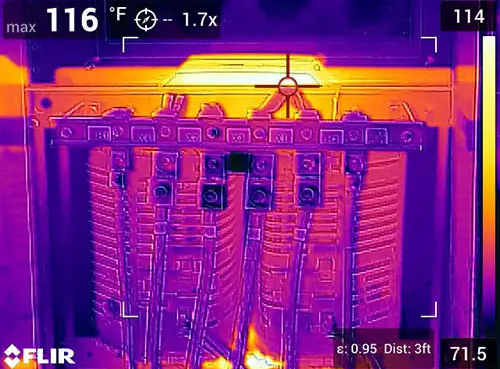
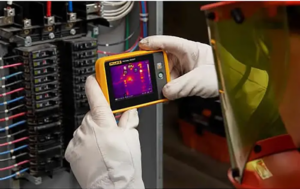
Electrical thermal imaging allows electricians to see abnormal heat inside electrical equipment that can’t always be spotted during a normal visual inspection. It’s a simple but effective way to find developing problems early—before they turn into an outage, damaged equipment, or an expensive emergency repair.
Why Heat Matters
 Electrical equipment naturally produces some heat while it’s operating; the problem is when something starts running hotter than it should. Identifying abnormal temperature differences could point to loose connections, overloaded circuits, phase imbalances, failing or damaged components, or other developing issues that can all create excessive heat.
The equipment may still be working normally. Nothing has tripped. There may not be any obvious signs that something is wrong. But with a thermal camera, that problem can stand out immediately.
The thermal image doesn’t always tell us exactly what is wrong. It tells us where we need to investigate.
What Electrical Equipment Can Thermal Imaging Inspect?
Thermal imaging can be used on many of the electrical systems found in commercial and industrial facilities, including:
- Electrical panels and breakers
- Switchgear
- Transformers
- Disconnects
- Motor control centers
- Starters and contactors
- Motors and drives
- Feeders and electrical connections
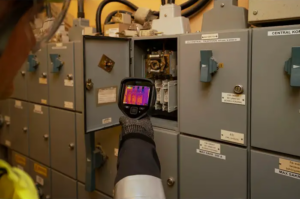
One of the biggest advantages is that these inspections can often be performed while the facility is operating normally. This is important because electrical problems are often easier to identify when equipment is energized and carrying its normal load.
Fix It on Your Schedule – or Wait Until It Picks One for You
 This is where thermal imaging really earns its place in a preventive maintenance program.
Imagine a connection inside a piece of switchgear beginning to deteriorate. It’s still working, but resistance at that connection is creating excessive heat.
If it’s found during an inspection, the facility can investigate the problem and potentially schedule a repair during planned downtime.
If nobody finds it, that connection may continue deteriorating until something fails.
Now you’re dealing with an emergency call, damaged equipment, overtime labor, replacement parts, and potentially hours or days of downtime.
For a commercial building, that’s inconvenient. For a manufacturing or industrial facility, it can get expensive very quickly.
“Finding a problem early gives you options. Finding it after something fails usually doesn’t.”
One Inspection Is Good. A History Is Better.
The first thermal inspection gives you a snapshot of how your electrical system is operating today.
Regular inspections can create something even more useful: a baseline.
Over time, previous thermal images can be compared with current conditions. If a breaker, connection, or piece of equipment that historically operated normally begins running hotter, that change can be identified and investigated.
This allows maintenance teams to start looking at trends, becoming proactive rather than reactive.
After repairs are completed, the equipment can also be scanned again to help confirm that the abnormal condition has been corrected.
Not Every Hot Spot Is an Emergency
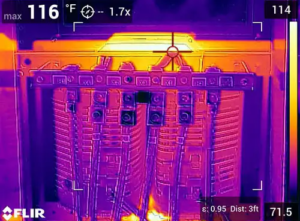 Seeing something hot on a thermal camera doesn’t automatically mean the building needs to be shut down. Temperature is only part of the picture.
A qualified electrician also considers the electrical load, surrounding components, equipment type, operating conditions, maintenance history, and severity of the temperature difference.
Some findings may need immediate attention. Others can be scheduled for the next maintenance window. Some may simply need to be monitored.
That’s another advantage of thermal imaging: it helps maintenance teams decide where their attention and maintenance dollars should go first.
Electrical Thermal Imaging and Preventive Maintenance
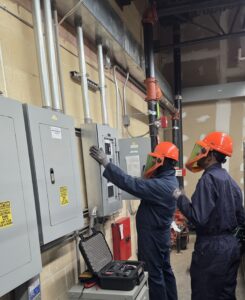 Preventive electrical maintenance has become increasingly important, especially with standards such as NFPA 70B, Standard for Electrical Equipment Maintenance, placing greater emphasis on documented electrical maintenance programs. It is also important to consider OSHA 29 CFR 1910.333, Selection and Use of Work Practices, when performing energized diagnostics and/or maintenance.
Thermal imaging is one tool that can be incorporated into that larger maintenance strategy.
It doesn’t replace electrical testing, inspections, cleaning, repairs, or other maintenance. And owning a thermal camera doesn’t automatically mean someone knows how to properly interpret what they’re seeing.
The camera identifies an abnormal condition. An experienced electrical professional still needs to determine what’s causing it and what should be done about it.
The Bottom Line
Your electrical system doesn’t have to completely fail before it tells you something is wrong. In many cases, the warning signs are already there—you just can’t see them with the naked eye.
Thermal imaging gives facility owners and maintenance teams another way to find those warning signs early, prioritize repairs, track equipment condition, and plan maintenance before a developing issue turns into an emergency.
Because when it comes to electrical maintenance, it’s almost always better to find the problem before the problem finds you.
Frequently Asked Questions About Thermal Imaging
What electrical problems can thermal imaging help identify?
Thermal imaging can help identify abnormal heat patterns that may point to loose connections, overloaded circuits, phase imbalances, failing components, or other developing electrical issues.
Can thermal imaging be performed while electrical equipment is operating?
In many cases, yes. Thermal inspections are often most useful when equipment is energized and carrying its normal load because abnormal temperature differences are easier to identify under operating conditions.
Does finding a hot spot mean immediate repair is required?
Not always. A qualified electrician should consider the load, equipment type, operating conditions, maintenance history, and severity of the temperature difference before deciding whether the issue needs immediate attention, scheduled maintenance, or continued monitoring.